Best alternative to GitGuardian, meet Jikida.
GitGuardian is focused on finding secrets in your code and git history. Jikida scans your repo for leaked keys too, then adds a website pentest, dependency checks, uptime monitoring and a firewall, in one account.
Why teams pick Jikida over GitGuardian.
GitGuardian is very good at one thing: finding secrets. It watches your repositories and git history for exposed API keys, tokens and credentials, and alerts you fast when one is committed. If secret leakage is your main worry, it is a focused, capable tool.
The limit is that secret scanning is one slice of security. It does not test your running website, check for vulnerable dependencies in depth, watch whether the site is up, or block an attack. Jikida scans your repo for leaked keys the way GitGuardian does, then adds a pentest of the live app, dependency checks against OSV, uptime monitoring and a managed firewall, so one account covers far more than secrets.
People ask if GitGuardian is a good pick for solo developers and small teams. It is strong at what it does. GitGuardian finds secrets in code and full git history, which is real, useful coverage. The honest question is scope. Secrets detection reads your code. It does not test the live site. Jikida covers both the code scan and the running app in one account.
Switching from GitGuardian to Jikida.
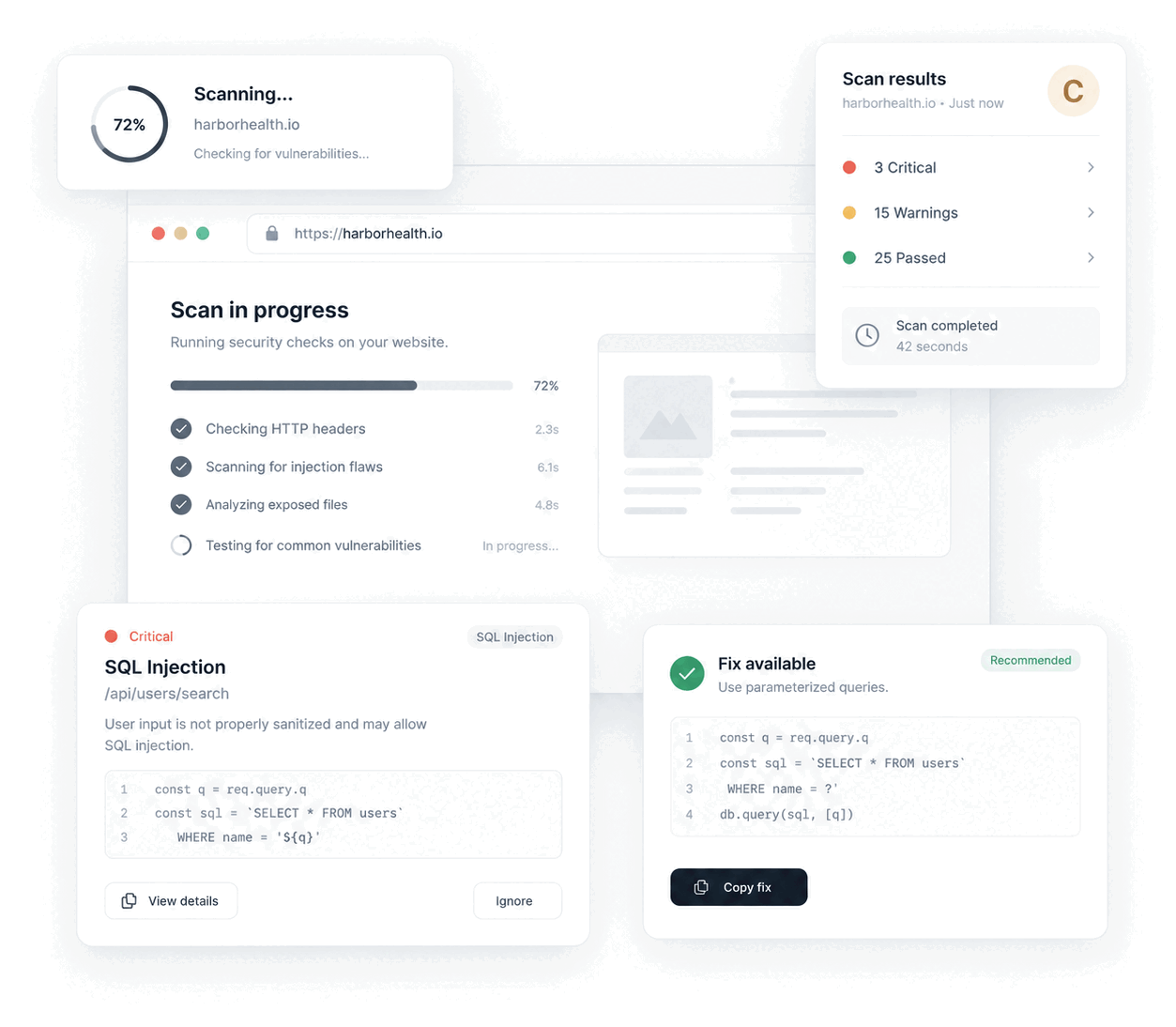
Jikida treats leaked secrets as one finding among many. The repo scan catches committed .env files, API keys and tokens, the same class GitGuardian specialises in, and also flags dangerous code and vulnerable dependencies via OSV plus a malicious-package feed.
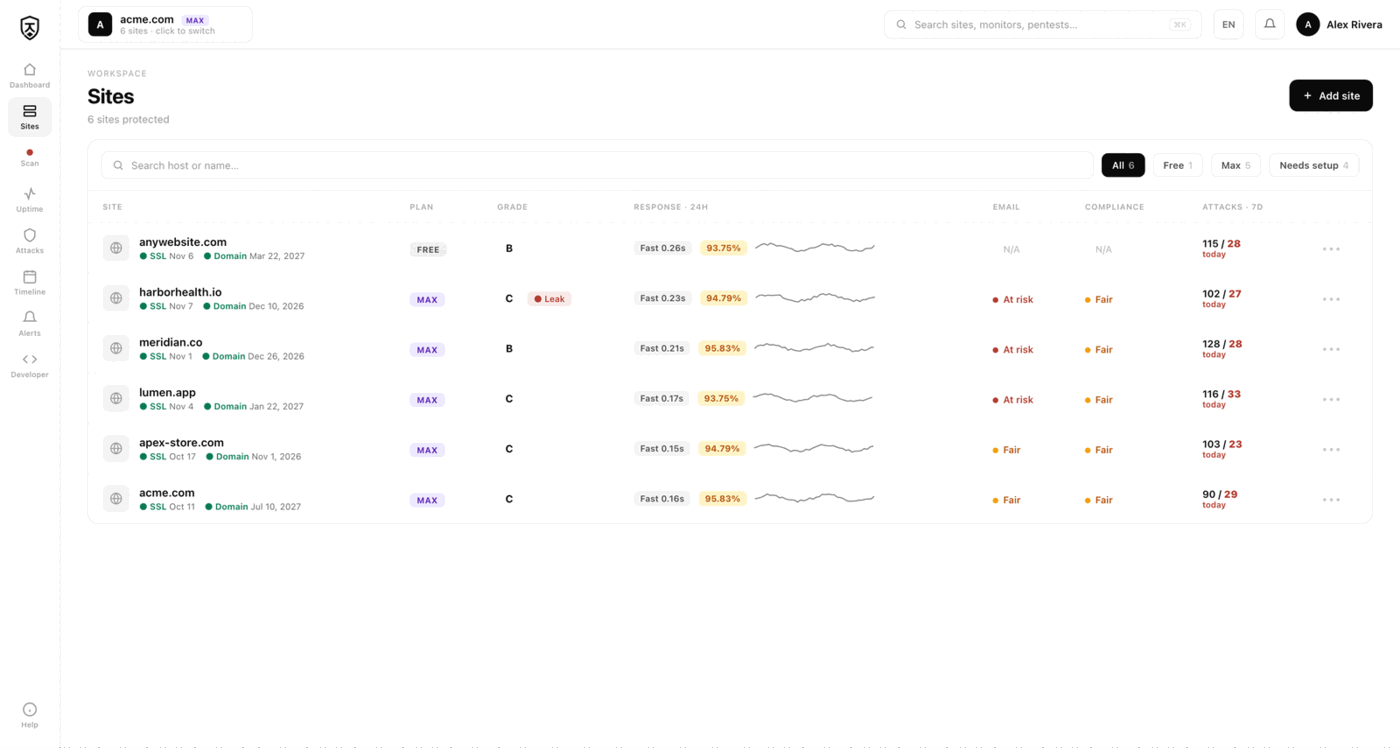
From the same account you also get a pentest of the deployed site, a managed firewall that blocks live attacks, and uptime, SSL and domain monitoring. GitGuardian tells you a key leaked; Jikida tells you that, tests the app it protects, and blocks the attack. There is nothing to migrate, and the free tier needs no card.
Jikida fits a solo developer or a small team that ships fast and wants one tool for code and site. There is nothing to migrate. You can run Jikida beside GitGuardian and keep its git-history secret sweep. Add Jikida for the parts a secrets scanner does not cover: an live pentest with a fix per finding, a managed WAF, and uptime plus SSL and domain-expiry monitoring. The free tier needs no card.
Compare Jikida with the rest.
How to switch from GitGuardian without a monitoring gap.
Migrating off GitGuardian is a five-minute job, not a project. You keep GitGuardian live while you set Jikida up, move your sites and alerts across, switch on the WAF and pentest GitGuardian never offered, and only then cancel. Here is the exact order.
-
01
Keep GitGuardian running while you set up
No rip-and-replace. Create a free Jikida account and add your sites there first, and GitGuardian stays live the whole time, so there is never a monitoring gap during the move.
-
02
Add your sites and endpoints
Point Jikida at the same URLs, domains and API endpoints you watch in GitGuardian. Uptime checks, SSL and domain-expiry monitoring and a public status page turn on the moment a site is added: no agent to install, no DNS change.
-
03
Wire up the alerts you already use
Connect email, Slack, Discord, Telegram or a signed webhook, and install the Jikida Alerts phone app. The call-style Alarm level rings through silent mode and Do Not Disturb for the 3am outage you cannot sleep through, something GitGuardian cannot do.
-
04
Turn on the security GitGuardian does not have
This is the real upgrade: a managed WAF in one SDK line, a scheduled pentest that grades your site A–F, repo and secret scanning, and active deception, all in the same account, at no extra vendor. Monitoring and security stop being two bills.
-
05
Run both for a cycle, then cancel GitGuardian
Watch the two side by side for a billing cycle. Once you trust the Jikida alerts and grades, cancel GitGuardian and consolidate. Most teams find they were paying for uptime and still had no security layer at all.
Frequently asked questions.
Everything people ask before they switch from GitGuardian. Still unsure? We are one message away.
If you want secret scanning plus wider security in one place, yes. Jikida scans your repo for leaked keys and credentials the way GitGuardian does, then adds a live-app pentest, dependency checks, uptime monitoring and a managed firewall that a secret scanner alone does not include.
Yes. The repo scan detects committed .env files, API keys and tokens, and the pentest also flags secrets shipped in client-side code on the live site. It is not a dedicated full-history secret platform, but for indie and small-team repos it catches the leaks that matter.
Everything past secrets: a website pentest, dependency vulnerability checks against OSV, a managed WAF, and uptime and SSL monitoring, all from one account.
Yes, no card needed. Free includes one repo scan, one pentest, uptime monitoring and a basic firewall. Paid plans add monthly scans, deep pentests and unlimited MCP scans.
Jikida uses developer pricing and has a free tier that needs no card. The free tier includes one live pentest, one repo scan, uptime monitoring, a basic WAF, and MCP tools. GitGuardian's pricing is set by its own plans. Compare on scope too: Jikida adds live-app testing and a WAF that a secrets scanner does not include. See /features.
GitGuardian scans code and git history for secrets. That is static analysis, the SAST side. It does not test the running site. Testing the live app is DAST. Jikida does both. It scans the repo for secrets, dangerous code, and vulnerable dependencies, and it runs a live pentest that checks headers, TLS, exposed .env or .git, open ports, and reflected XSS.
One platform · One install
Pentest, scan and protect from one account.
A live-app pentest, repo and secret scanning, a managed firewall and monitoring — free to start, no card. Plans from $15/mo.