Best alternative to Wordfence, meet Jikida.
Wordfence is the classic WordPress firewall. Jikida covers WordPress too and adds uptime, pentest, repo scanning and a phone alarm that actually wakes you.
Why teams pick Jikida over Wordfence.
Wordfence is the classic name in WordPress security, and millions of sites run it for good reason. Its endpoint firewall, malware signatures, login protection and vulnerability feed are tuned specifically for the WordPress ecosystem, and if a WordPress site is all you run, Wordfence is a well-understood, battle-tested choice with a huge community behind it.
The reason to consider a Wordfence alternative is that it lives inside WordPress. It protects the CMS, but it does not watch whether the site is up, cover the Next.js app or Laravel API alongside it, scan your repository for leaked secrets, or wake you at 3am when something breaks. Jikida protects WordPress just as capably through its managed firewall, and covers every other stack in the same account, adding uptime, status pages, pentest, repo scanning and a call-style phone alarm.
There is also a structural difference worth naming. Wordfence is a plugin, so it runs inside the same WordPress install it protects and shares that server's resources and fate. If the site goes down or the host is overwhelmed, the plugin goes down with it and cannot tell you. Jikida sits outside your WordPress install: the managed WAF connects through a one-line SDK or an edge layer, and the uptime and security checks run from Jikida's own regions. So the site is watched even when WordPress itself is not responding, and the protection is not competing with your CMS for the same PHP workers.
Switching from Wordfence to Jikida.
You keep the protection Wordfence gave your WordPress sites: a managed WAF that blocks injection, XSS, brute-force login attempts and bad bots, with automatic rate limits. Because Jikida's firewall fails open, your site keeps serving from a cached policy even if Jikida has an outage, and because it is not tied to the CMS, the same protection extends to any non-WordPress app you run.
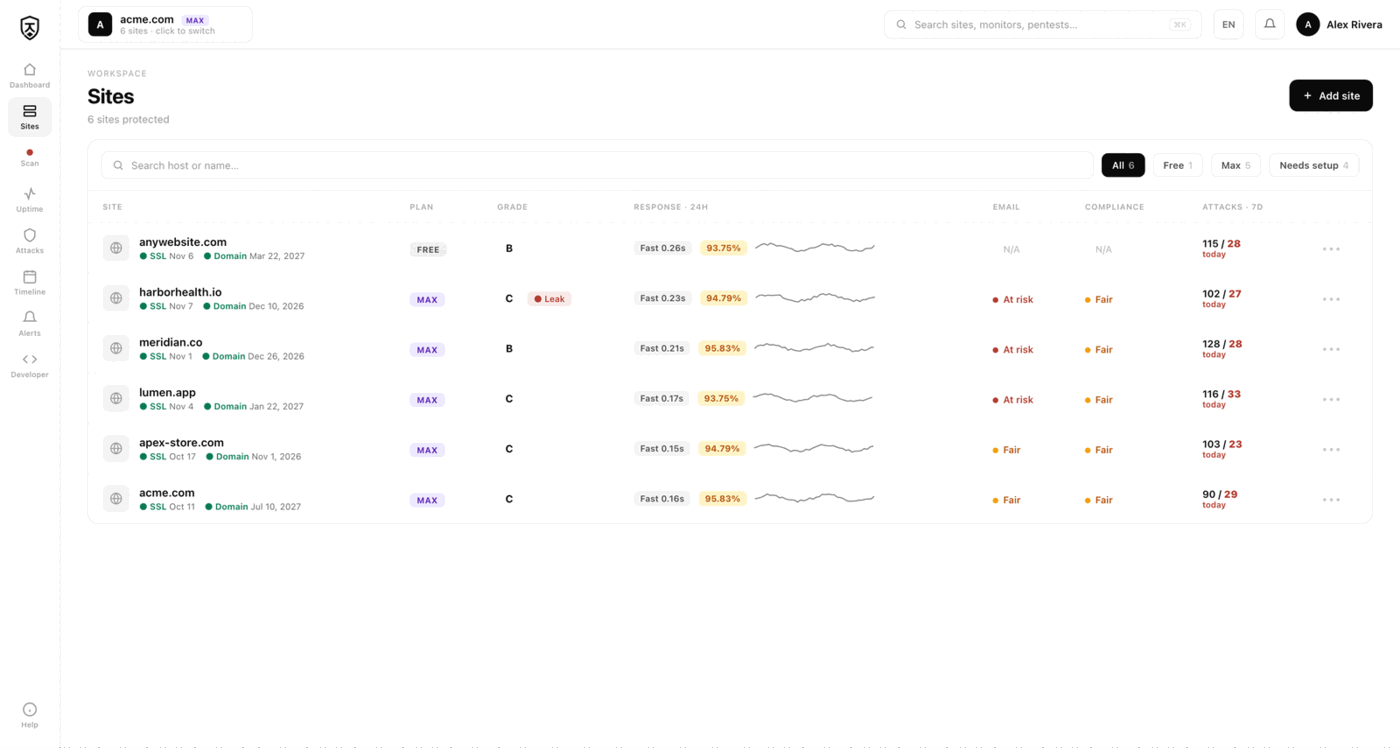
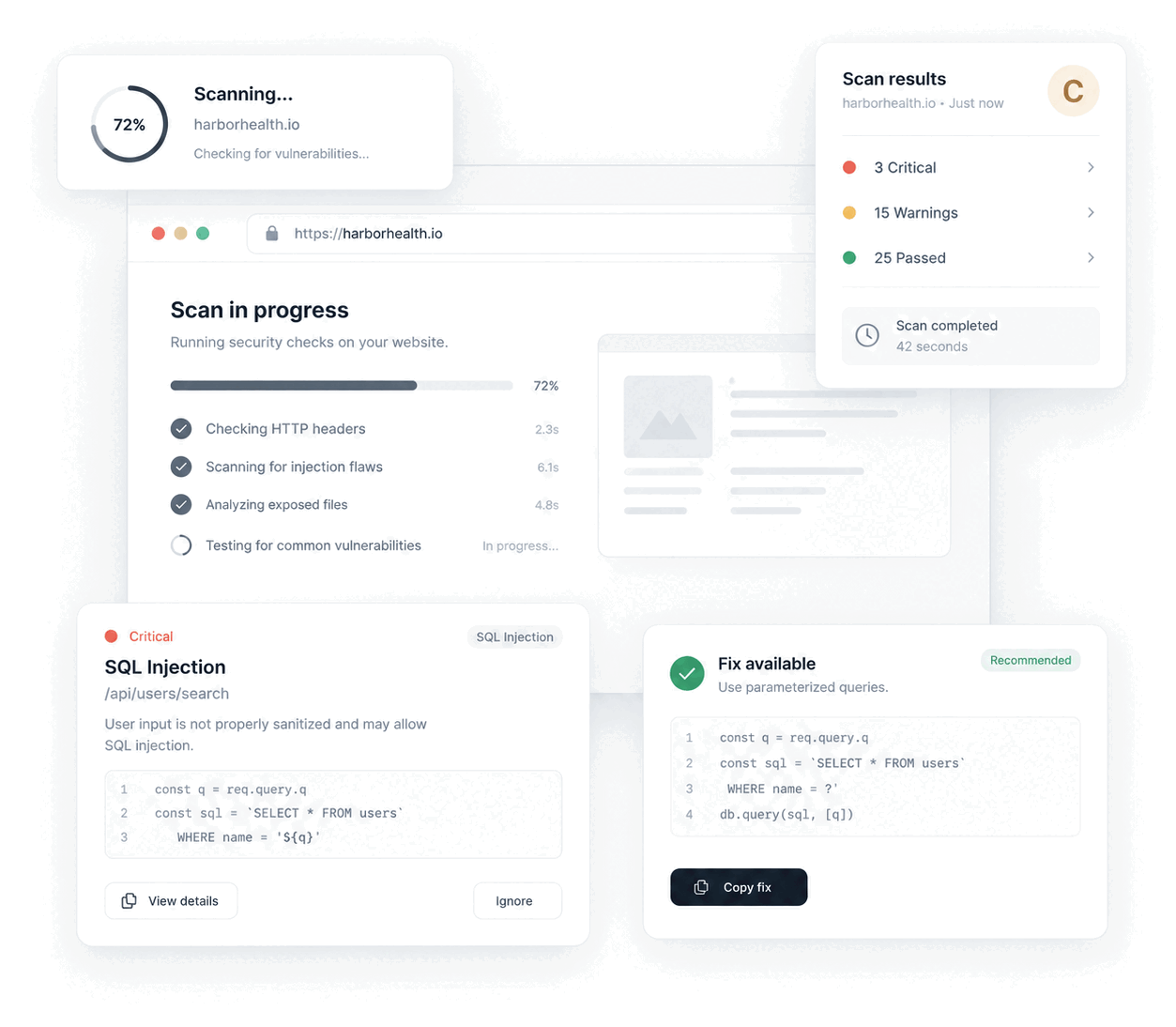
What you gain is everything outside the plugin's reach. The same account monitors uptime and SSL and domain expiry and publishes status pages, runs a monthly surface pentest and an online security scanner across your whole stack, and scans your repository for leaked API keys before an attacker finds them. Deep pentests run on the Max plan. When a site goes down or comes under attack, the phone-app alarm rings through Do Not Disturb like a call, not a notification you sleep through.
Migration does not mean touching your WordPress install in a risky way. You add a site and connect via the SDK or edge WAF, and protection begins across all your properties, not just the CMS. The free tier needs no card, and annual billing is roughly 25% under monthly.
Compare Jikida with the rest.
How to switch from Wordfence without a monitoring gap.
Migrating off Wordfence is a five-minute job, not a project. You keep Wordfence live while you set Jikida up, move your sites and alerts across, switch on the WAF and pentest Wordfence never offered, and only then cancel. Here is the exact order.
-
01
Keep Wordfence running while you set up
No rip-and-replace. Create a free Jikida account and add your sites there first, and Wordfence stays live the whole time, so there is never a monitoring gap during the move.
-
02
Add your sites and endpoints
Point Jikida at the same URLs, domains and API endpoints you watch in Wordfence. Uptime checks, SSL and domain-expiry monitoring and a public status page turn on the moment a site is added: no agent to install, no DNS change.
-
03
Wire up the alerts you already use
Connect email, Slack, Discord, Telegram or a signed webhook, and install the Jikida Alerts phone app. The call-style Alarm level rings through silent mode and Do Not Disturb for the 3am outage you cannot sleep through, something Wordfence cannot do.
-
04
Turn on the security Wordfence does not have
This is the real upgrade: a managed WAF in one SDK line, a scheduled pentest that grades your site A–F, repo and secret scanning, and active deception, all in the same account, at no extra vendor. Monitoring and security stop being two bills.
-
05
Run both for a cycle, then cancel Wordfence
Watch the two side by side for a billing cycle. Once you trust the Jikida alerts and grades, cancel Wordfence and consolidate. Most teams find they were paying for uptime and still had no security layer at all.
Frequently asked questions.
Everything people ask before they switch from Wordfence. Still unsure? We are one message away.
Yes, especially if you run more than WordPress. Jikida protects WordPress with a managed firewall that blocks injection, XSS and brute-force attacks, and it also covers your other stacks and adds uptime, pentest, repo scanning and a phone alarm.
It does. The managed WAF blocks the injection, XSS, brute-force login and bot attacks WordPress faces, with automatic rate limits, and it fails open so the site keeps serving even during a Jikida outage. Unlike a plugin, it also covers non-WordPress apps.
Yes. Beyond the firewall, Jikida runs a surface pentest and website scanner across all your sites and scans connected repositories for leaked secrets, which a WordPress-only plugin cannot do. Deep pentests run on the Max plan.
Yes, no card required. Free includes basic managed WAF, a monthly surface pentest, uptime and a status page. Paid plans add deep pentests, repo scanning, file-upload scanning and unlimited scans, and yearly billing is about 25% cheaper.
No. Wordfence runs as a PHP plugin inside WordPress, so its scans and firewall use the same server resources as your site. Jikida's managed WAF connects through a lightweight SDK or an edge layer that adds about 4ms and fails open, and the pentest and uptime checks run from Jikida's own infrastructure, not inside your WordPress workers.
Yes, and this is a real limit of any in-site plugin. A plugin that lives inside WordPress cannot report that its own site is unreachable. Jikida monitors from separate regions, so if WordPress stops responding you still get the alert, including the call-style phone alarm that rings through Do Not Disturb.
One platform · One install
Pentest, scan and protect from one account.
A live-app pentest, repo and secret scanning, a managed firewall and monitoring — free to start, no card. Plans from $15/mo.